

Social Dialogue Forum Promotes Decent Work and Social Protection for Informal Economy Workers and Small and Medium Enterprises
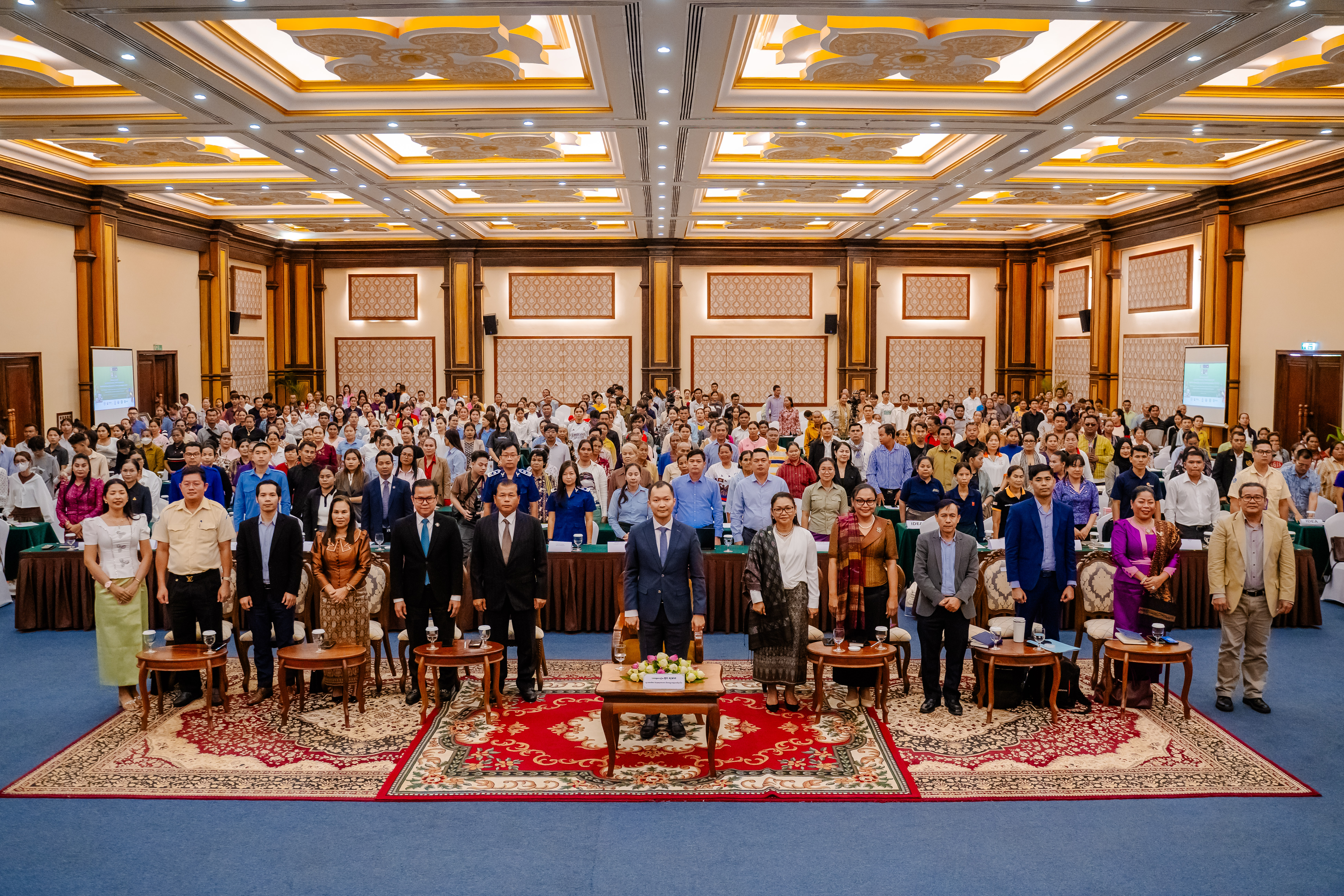
Siem Reap Province,The Coalition of Cambodian Farmer Community (CCFC), in collaboration with the Independent Democracy of Informal Economy Association (IDEA), Banteay Srei Organization, and Oxfam Cambodia, organized a Social Dialogue Forum on “Towards Decent Work and Social Protection for Informal Economy Workers and Small and Medium Enterprises (SMEs)” under the presidency of H.E. Prak Sophorn, Governor of Siem Reap Province.
The forum brought together approximately 480 participants, of whom 65 percent were women. Participants included representatives from government ministries and institutions, local authorities, civil society organizations, development partners, the private sector, trade unions, and representatives of informal economy workers, including street vendors, home-based workers, food delivery workers, smallholder farmers, small-scale agri-food producers, and small handicraft enterprises.
The forum was organized as part of a joint effort by the Royal Government of Cambodia, civil society organizations, and development partners to promote decent work and strengthen social protection systems for workers in the informal economy and small and medium enterprises (SMEs). These groups represent a significant share of Cambodia's workforce and play a vital role in driving economic growth, food security, and sustainable development.
According to the organizers, the forum aimed to raise awareness of the progress made in Cambodia's legal and policy frameworks, national strategies, and government programs that have created a more enabling environment for informal economy workers. These initiatives are designed to support rural women, young farmers, workers in the agri-food sector, self-employed workers, and SMEs by promoting labour rights, decent work, and formal recognition in line with national legislation and international labour standards.
The discussions also focused on strengthening and expanding Cambodia's social protection system to ensure that informal economy workers—particularly vulnerable groups—can access equitable, inclusive, transparent, and accountable social protection services. Participants emphasized that expanding social protection is essential to improving livelihoods, reducing vulnerability, and ensuring that no one is left behind in Cambodia's socio-economic development.
Beyond policy discussions, the forum provided an important platform for dialogue among informal economy workers, SME representatives, government institutions, civil society organizations, trade unions, and development partners. Participants exchanged experiences, shared challenges, and presented their concerns and recommendations regarding employment conditions, occupational safety and health, social protection, access to public services, and legal recognition. These discussions were intended to help identify practical solutions and strengthen collaboration among all stakeholders.
Participants noted that many workers in the informal economy continue to face significant challenges, including limited access to social protection, occupational safety and health services, legal recognition, and decent working conditions. They emphasized that strengthening social dialogue and multi-stakeholder cooperation is essential for developing responsive policies and ensuring that government programs effectively address the real needs of workers and small enterprises.
The forum concluded with a shared commitment from all stakeholders to continue strengthening cooperation, promoting decent work, and expanding social protection coverage for informal economy workers and SMEs. Participants expressed confidence that sustained dialogue and collaborative action would contribute to more inclusive economic development, improved labour rights, and stronger social protection systems in Cambodia, in line with the country's national development priorities and the Sustainable Development Goals (SDGs).


