

Svay Rieng Farmers’ Network Strengthens Solidarity and Develops Community Development Plan for 2026
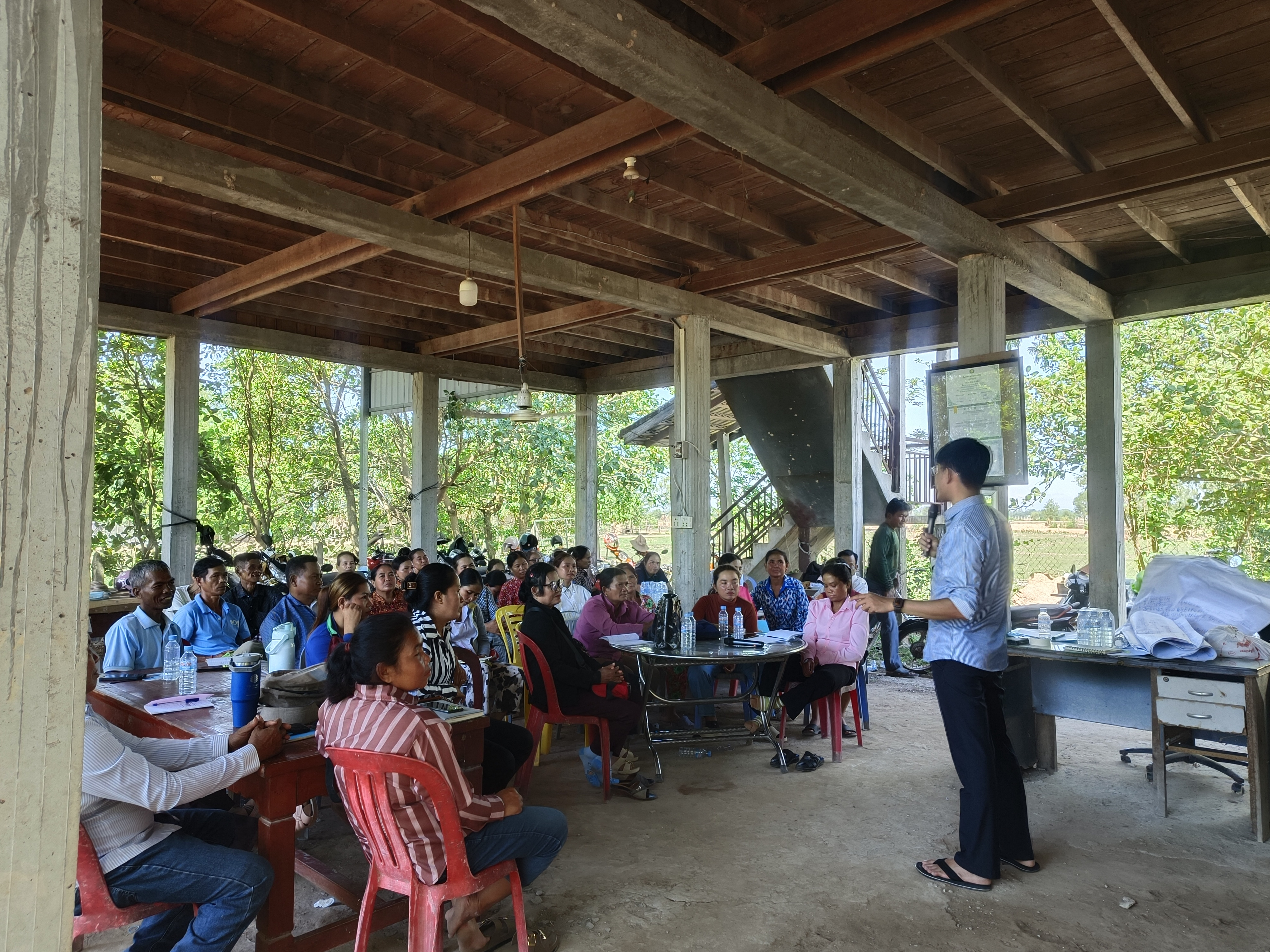
Svay Rieng Province: On June 16, 2026, the Coalition of Cambodian Farmers Community (CCFC) organized a reflection and planning meeting for the Provincial Farmers’ Network Committee of Svay Rieng Province at Haek Samnang Village, Meun Chey Commune, Romduol District, Svay Rieng Province. The meeting was attended by representatives from seven farmer communities and nine rural women’s groups that are members of the provincial farmers’ network.
The meeting aimed to provide a platform for communities to share their current situations, experiences, challenges, and important information. Through discussions and exchanges, participants reaffirmed their commitment to strengthening relationships, building solidarity, and enhancing the collective power and rights of communities and grassroots groups.
During the meeting, participants reflected on the implementation of their 2025 community action plans by reviewing achievements, challenges, lessons learned, and responses to issues faced at the local level. The meeting also focused on strengthening the roles and responsibilities of community committees and the provincial network committee in accordance with the organization's statutes and internal regulations, ensuring effective leadership and accountability to members.
In particular, the meeting emphasized the development of strategic approaches to address land issues faced by farming communities in accordance with rights-based and legal principles. Participants discussed methods for resolving land disputes through the collection of relevant information and documentation, strengthening legal awareness, conducting peaceful advocacy, and engaging with relevant authorities and institutions to seek fair, transparent, and lawful solutions. Strengthening these strategies was considered essential for protecting farmers’ rights and interests, reducing conflicts, and promoting peace within communities.
The meeting also focused on studying and disseminating policies related to farmers’ rights, social protection, food security, environmental protection, and climate change adaptation, enabling community members to better understand and actively participate in these important areas.
The Provincial Farmers’ Network and the Provincial Women Farmers’ Network are regarded as important mechanisms for mobilizing the voices, strengths, and participation of farmers, particularly women farmers and rural youth, to protect their rights and improve their livelihoods.
These networks have played an active role in supporting farmers to address land-related issues by providing legal information, conducting advocacy, and facilitating dialogue with relevant authorities to seek peaceful and just solutions. At the same time, the networks have promoted awareness and participation in social protection systems, including access to healthcare services, registration with the National Social Security Fund (NSSF), and other social assistance programs that help reduce risks and improve livelihood security.
Furthermore, the farmers’ and women farmers’ networks have contributed to promoting food security through sustainable agriculture and agroecological practices, reducing the use of hazardous agrochemicals, and conserving local seeds within communities. These initiatives help ensure that farming households have sufficient, safe, and nutritious food.
In addition, the networks have contributed to environmental protection, sustainable natural resource management, and climate change adaptation. Notably, the Women Farmers’ Network has strengthened women’s participation in leadership, decision-making, and advocacy for gender equality, rights, and social justice.
Therefore, the Provincial Farmers’ Network and the Provincial Women Farmers’ Network are not merely platforms for bringing members together; they are powerful driving forces for community development, rights protection, and the creation of a more equitable, inclusive, and sustainable society for all Cambodian farmers.