

social protection
social protection
Why do we work in social protection?
Cambodia, a Southeast Asian country, has witnessed significant economic progress, yet rural communities continue to face complex challenges. Around 70% of the population resides in rural areas, where agriculture plays a central role in the economy. Despite the importance of rural livelihoods, communities experience persistent poverty, limited access to essential services, and numerous issues surrounding land, agriculture, and climate change.
In Cambodia, around half of the population and over three-quarters of the poor live in rural areas, where inequalities between urban and rural communities remain stark. Rural inhabitants, especially women and youth, are disproportionately affected by poverty, with many living on less than $2 per day. Agriculture remains the main livelihood for one-third of the population and is particularly critical for the majority of rural poor. However, this sector is plagued by informal labor, low and irregular incomes, and heightened vulnerability to economic shocks, natural disasters, and climate change.
Women and youth in rural communities face significant barriers to accessing essential social protection programs, including healthcare, maternity benefits, and pensions. Women in agriculture, in particular, struggle to access maternal health services, while many rural youth lack healthcare education and opportunities to improve their well-being. Without adequate social protection, these populations are forced to work in unsafe conditions, even when sick, and resort to harmful coping strategies such as child labor or taking on predatory loans during times of financial distress.
The modernization of agriculture, largely driven by large-scale producers, has further marginalized smallholder farmers, women, and youth, leaving them dependent on dominant actors and often pushing them to migrate to urban areas in search of better opportunities. This trend accelerates the aging and feminization of agriculture, while also increasing dependence on remittances in rural communities.
The lack of social protection for workers in the agri-food sector also perpetuates hunger, malnutrition, and poverty, leaving rural populations exposed to unnecessary risks. Currently, approximately 75% of Cambodians, particularly those in rural areas, are not covered by social insurance or social assistance programs. This is a significant challenge to achieving sustainable rural development and poverty reduction.
Cambodia’s Social Protection Framework Policy for 2025 aims to address this issue by expanding coverage to the poor and vulnerable, especially in rural areas. However, more than three-quarters of the population remains without access to these vital safety nets. Expanding social protection systems to include healthcare, maternity benefits, pensions, and other services is essential for improving food security, nutrition, and economic resilience in rural areas.
The establishment of social protection floors, guaranteeing at least basic income security and access to healthcare, is crucial for safeguarding the economic and social rights of marginalized groups. It is also an opportunity to empower rural communities by promoting collective action through cooperatives and strengthening the social contract between the government and its citizens. By addressing these gaps, Cambodia can foster more inclusive and sustainable rural development, reduce poverty, and build resilience in its most vulnerable populations.
CCFC Strategies 2025-2029
At the heart of CCFC’s mission is the belief that every person, regardless of gender, income, or location, deserves a life of dignity, security, and opportunity. Social protection is not a privilege; it is a fundamental human right and a critical foundation for inclusive development, poverty reduction, and social justice.
In Cambodia, the majority of farmers and rural workers especially women, youth, indigenous communities, and informal workers remain excluded from basic social protection systems. Without access to healthcare, maternity and disability support, pensions, or safety nets in times of crisis, rural families are left highly vulnerable to shocks such as illness, loss of income, climate disasters, and forced evictions.
We work in social protection because:
-
Peasants are excluded: Most smallholder farmers and agri-food workers in Cambodia do not receive health insurance, old-age pensions, or income protection.
-
Women face unequal burdens: Rural women carry a double workload unpaid care work at home and low-paid labor in fields or factories without adequate recognition, safety, or protection.
-
Shocks push people deeper into poverty: When floods, droughts, market collapses, or health emergencies hit, families with no support system fall into long-term poverty.
-
Informality traps rural workers: Most peasants and rural youth work informally—without contracts, job security, or benefits—which denies them their right to protection and justice.
-
Social protection builds resilience and peace: A well-functioning social protection system strengthens communities, reduces inequality, supports economic security, and empowers people to participate meaningfully in local governance and development.
Through community organising, advocacy, research, and partnerships, CCFC is committed to promoting a social protection system that is inclusive, gender-responsive, rights-based, and accountable. We work to ensure that rural communities, especially the most marginalised, have access to public services and protection schemes that meet their real needs.
We believe that social protection is not only a safety net but a pathway to empowerment, resilience, and long-term social transformation. That is why it remains a core pillar of our strategy and a priority in our fight for justice and equity in Cambodia.
What We Do on Social Protection
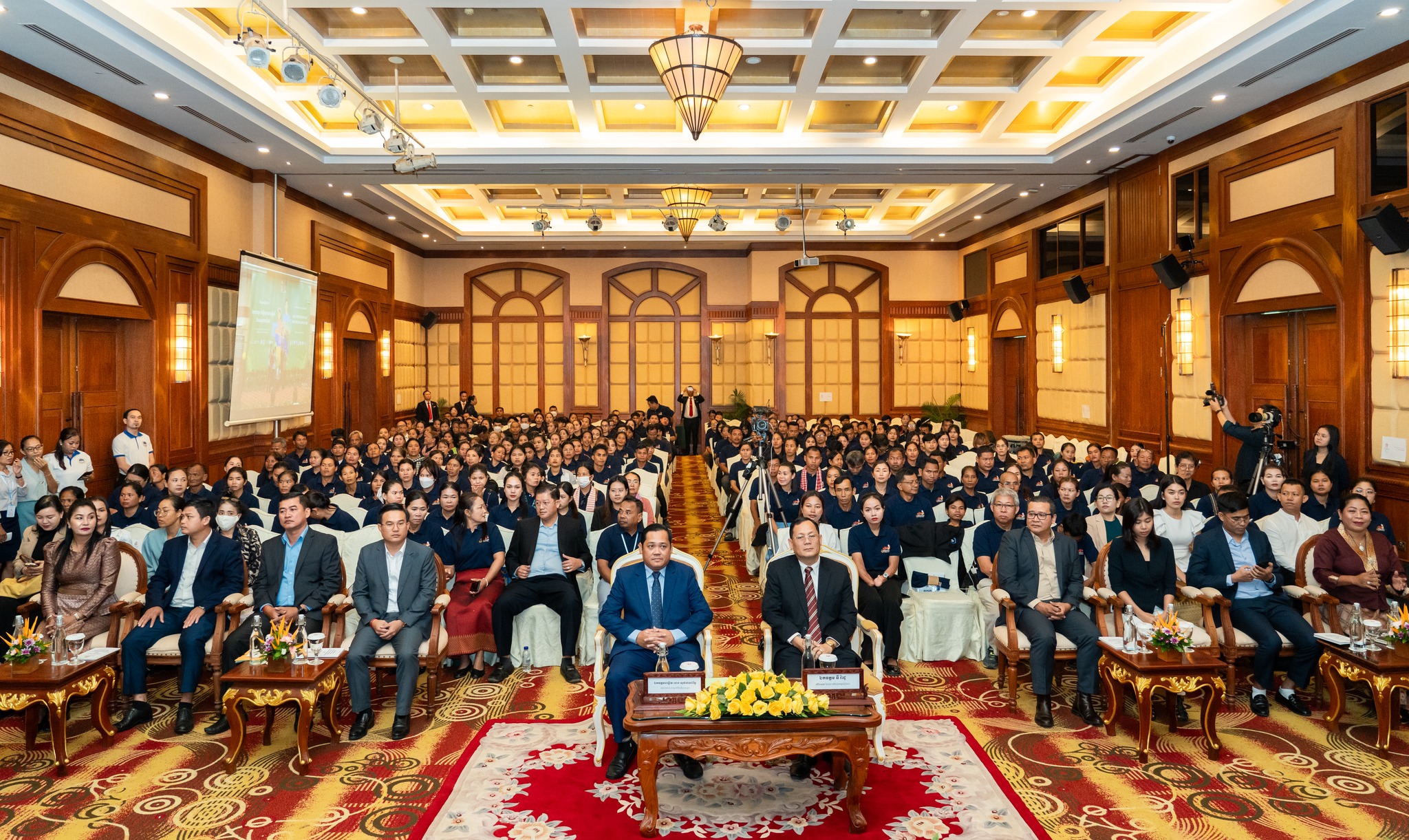
The Coalition of Cambodian Farmers Community (CCFC) is a grassroots movement working to protect and promote the rights, dignity, and well-being of smallholder farmers, rural women, youth, and marginalized communities. CCFC organizes, builds capacity, and advocates in collaboration with rural groups and alliances across 14 provinces and beyond.
1. Organising and Strengthening Community Groups: Building Grassroots Power
CCFC operates on the foundational principle that sustainable change starts at the grassroots. Our approach involves intensively organising and building the capacity of various community groups to empower them as agents of local and national development. This work is structured around supporting the following distinct, yet interconnected, groups:
-
Rural Women’s Groups: Driving Gender Equality and Social Protection Formed in provinces where women frequently endure multiple forms of exclusion and rights violations, these solidarity groups are crucial for transforming gender dynamics. CCFC supports them to become local leaders by enhancing their capacity to collectively advocate for their rights. Specifically, these groups actively demand labour rights and secure jobs, challenge pervasive gender-based violence, and fight for improved access to social protection and public services. Through mutual support, shared learning, and focused leadership development, rural women gain the confidence, skills, and collective voice necessary to influence community decisions and ensure gender equality is central to local governance and development.
- Saving Groups Community Fostering Financial Resilience: The Saving Groups Community plays a vital role in building the financial resilience and collective stability of our members. These groups encourage regular small savings and provide a platform for members to access low-interest internal loans for emergencies, investments in sustainable livelihoods (such as agroecology), or education. Beyond simple saving, these groups are essential in teaching financial literacy, collective management, and shared accountability, providing a crucial, locally controlled safety net that reduces reliance on exploitative private lenders and strengthens community self-reliance.
-
Rural Youth Groups: Forging the Next Generation of Advocates Young farmers and rural youth represent the future of Cambodia's food system. We organise them into village and provincial-level youth networks, training them to serve as digital advocates, climate leaders, and democratic participants. These groups are primarily focused on promoting environmental justice, youth inclusion in local development planning, and protecting vital community resources. To ensure their efficacy and safety, youth are equipped with practical skills in media production, digital security, and social protection awareness, enabling them to effectively voice their concerns and hold duty-bearers accountable in the digital age.
-
Rural Peasant and Community-Based Organisations (CBOs): Defending Rights and Livelihoods CCFC provides critical support to both long-established and newly formed community groups, particularly those affected by land conflicts, forced evictions, or agro-industrial encroachment. The support focuses on strengthening their fundamental capabilities, including internal governance, leadership structure, and confident participation in dialogue with local and national authorities. Furthermore, CCFC ensures they are connected with essential services, such as legal aid and intensive capacity development. This comprehensive support aims to secure their rights and facilitate initiatives that improve their access to sustainable livelihoods and local markets.
-
Provincial Peasant Alliances: Unifying Voices for National Impact CCFC facilitates the creation and strengthening of broad alliances composed of farmers and community leaders at the provincial level. These alliances serve as critical platforms for coordination, advocacy, and strategic collective action. By uniting grassroots demands, they amplify local voices, effectively bringing their concerns to national-level forums and policymaking spaces. Importantly, these alliances also function as self-sustaining centres for collective learning and solidarity, ensuring that local successes and strategies are shared and replicated across the province.
2. Capacity Building for Empowerment
We believe providing tools and knowledge is key to long-term empowerment. We invest in long-term transformation through tailored training and systematic knowledge sharing designed to equip community members to navigate complex economic, social, and political landscapes.:
-
Social Protection Access: We empower communities by ensuring they understand and can claim their official social entitlements. Our comprehensive training covers the specific requirements and processes for accessing vital government schemes, including the Equity Card (IDPoor), maternity benefits, disability assistance, and coverage for informal workers. By increasing literacy around these state provisions, we help families establish a fundamental financial safety net that protects them against health crises and economic shocks.
-
Leadership & Gender Equality: A special emphasis is placed on building the leadership capacity of rural women and youth. These targeted programs provide the skills necessary for effective communication, organizational management, and public advocacy. The goal is to ensure their meaningful and effective participation in decision-making bodies, ranging from local community councils and commune development planning meetings all the way up to national-level policy dialogues, thereby embedding their perspectives into the governance structure.
-
Key Skills for Change: Advocacy and Policy Analysis
To maximize their impact, we provide critical training in two areas:
-
Advocacy and Influencing Skills: Community members are trained on how to effectively structure their arguments, organize public awareness campaigns, engage with the media, and build strategic alliances to influence decisions and drive policy change at various levels.
-
Policy Analysis (Social Protection): We equip leaders with the ability to analyze and critique government social protection policies. This technical skill allows them to identify gaps, propose practical solutions, and advocate for policy reforms that make social safety nets more accessible, inclusive, and responsive to the needs of vulnerable farmer communities.
-
-
Labor Rights & Decent Work: We actively strengthen awareness around labor rights within the agri-food sector, focusing particularly on vulnerable informal workers who often lack protection. Our advocacy efforts center on securing job stability, decent wages, and guaranteed occupational safety for these essential workers. By equipping them with knowledge of labor laws and collective bargaining techniques, we help them demand fair and safe working conditions.
-
Agroecology & Climate Resilience: To combat environmental instability and poor health outcomes, our training focuses intensely on promoting sustainable and chemical-free agriculture. This includes comprehensive knowledge sharing on agroecology principles, effective methods for adapting to climate change, and strategies to achieve food sovereignty. This capacity building not only enhances the climate resilience of farms but also promotes ecological sustainability and improves the health of farming families.
-
Just Transition and Green Jobs: We prepare communities for the global shift toward a green economy by emphasizing Just Transition principles. This training ensures that as agricultural practices evolve, farmer communities and informal workers are not left behind. We focus on:
-
Skills Development for emerging Green Jobs within sustainable value chains (e.g., organic food processing, eco-tourism, sustainable resource management).
-
Advocating for policies that provide social safety nets and retraining opportunities to minimize risks associated with climate change and economic shifts, ensuring the transition is fair and equitable for all.
-
-
Digital & Legal Empowerment: Community leaders and activists are equipped with essential digital tools and social media skills to amplify their voices and coordinate campaigns effectively. This is combined with intensive training on legal knowledge, documentation, and advocacy techniques. By mastering both digital communication and legal frameworks, community members gain the power to speak out, document rights violations, and protect their land and livelihoods more effectively.
3. Advocacy and Campaigning
CCFC is dedicated to achieving justice and systemic improvement by actively engaging in multi-level advocacy and strategic campaigning. We focus on transforming policies and securing structural changes that benefit farmer communities and vulnerable workers.
-
Community-Led Local Advocacy:
Our advocacy begins on the ground, supporting farmers and local leaders to become effective spokespeople for their communities. We facilitate their ability to engage directly with commune councils, district, and provincial authorities. This local engagement focuses on pressing issues like securing land tenure rights, guaranteeing equitable water access, protecting community forests, and ensuring reliable access to public services. By amplifying community concerns in official forums, we push local governments toward better accountability and service delivery.
-
Social Dialogue and Influencing: To ensure that farmer voices directly shape policy, we prioritize robust Social Dialogue and Influencing at all levels. We organize and participate in various structured engagements, including:
-
Local Forums and Public Forums: Creating spaces where communities can meet directly with local authorities to raise concerns and seek immediate solutions.
-
Regional Forums: Participating in and organizing cross-provincial or regional meetings to consolidate demands and share effective strategies.
-
Meetings with Local to National Level Officials: Facilitating face-to-face dialogues with government officials at every level, from commune to ministry, to discuss policy implementation, land disputes, and social protection gaps.
-
-
National Campaigns & Legal Reforms: We lead and participate in national campaigns aimed at achieving large-scale, legislative change. Our teams actively push for key legal reforms by engaging directly with line ministries, parliamentary commissions, and relevant government bodies. Priority areas for reform include strengthening the Land Law, institutionalizing comprehensive social protection frameworks, tightening pesticide regulation to ban harmful chemicals, and integrating climate justice principles into national development planning. This work aims to establish a legal and policy environment that protects the rights and livelihoods of smallholder farmers.
-
International Solidarity & Visibility: CCFC strategically works with international partners to give rural voices global visibility and leverage. We collaborate with organizations like Oxfam, UN bodies, ASEAN civil society groups, and regional farmer alliances. This partnership brings local experiences and policy demands into international policy spaces, global climate summits, and human rights forums. International visibility is crucial for driving accountability from both governments and multinational corporations and mobilizing external support for grassroots initiatives.
-
Public Mobilization: We believe in the power of collective action to shift public opinion and political will. We lead grassroots campaigns and public mobilization efforts around key global and national dates. This strategic timing—including events like International Peasants’ Day, World Environment Day, Social Protection Week, the 16 Days of Global Action, and Social Protection Week in Cambodia—allows us to raise critical awareness, showcase the collective power of farmer alliances, and demand immediate attention to farmer rights, food security, and environmental protection. Importantly, this mobilization includes social media advocacy, where we utilize digital platforms to rapidly share success stories, document rights violations, and rally public support for structural change.
4. Policy and Social Protection Research
The Coalition of Cambodian Farmer Communities (CCFC) continues to strengthen evidence-based advocacy through its focused social protection research initiatives. These activities are designed to deepen our understanding of the severe challenges faced by rural peasants, women, and informal agricultural workers in accessing social protection. The ultimate goal is to generate robust evidence that directly informs policy solutions ensuring schemes are inclusive, equitable, and resilient to external shocks.
Our research is structured around key themes directly affecting the health and livelihood security of farmer communities:
- Access to Healthcare and the Health Equity Fund (HEF): We study the actual utilization of the Health Equity Fund (HEF) by rural women and informal workers. This research identifies structural and practical barriers to healthcare access and proposes solutions to make the scheme more effective and responsive at the local level.
- Chemical Exposure, Health, and Occupational Safety: We document the profound health and social impacts of the overuse of chemical pesticides and fertilizers on rural peasants and women farmers. A core focus is advocating for the recognition of chemical exposure as an occupational disease under current legislation and pushing for improved occupational safety policies across the agri-food sector.
- Community-based Pesticide Action Monitoring: This is a critical component of our public health protection work. We establish monitoring teams at the local level to record the actual usage, side effects, and poisoning cases caused by pesticides and chemical fertilizers. This community-collected data provides powerful evidence for demanding stricter regulations and promoting natural farming alternatives.
- Climate-Responsive Social Protection: This research explores how current social protection programs and mechanisms can be adapted to effectively support smallholder farmers whose livelihoods are increasingly threatened by climate-induced challenges, such as severe floods and droughts.
- Gender and Social Protection: We conduct assessments to understand how existing social protection schemes address—or often overlook—the specific needs of women workers in the agri-food sector. This analysis leads to the proposal of gender-transformative policy recommendations to ensure fairness and equity.
Through participatory research, CCFC actively engages local community members, youth researchers, and women’s groups in the field to collect empirical data, share lived experiences, and co-create knowledge. Findings from these rigorous studies are then strategically shared with relevant ministries, civil society networks, and international partners to directly influence policy reforms and promote universal, equitable, and climate-resilient social protection for all.