

16 Days of Global Action on Agroecology
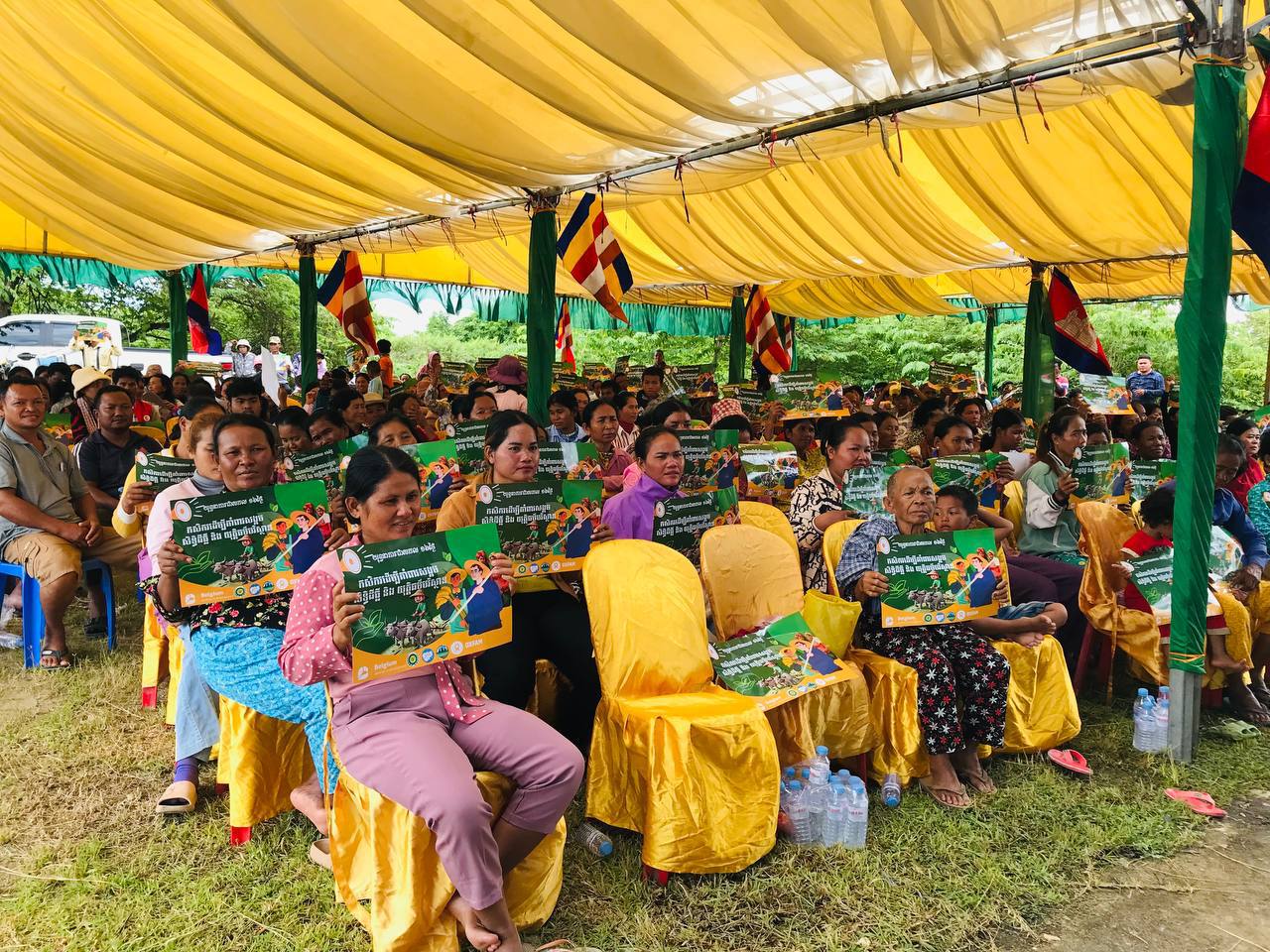
On October 10, 2024, rural youth and women peasants from the Trapeang Chor community in Lmum village, Trapeang Chor commune, Oral district, Kampong Speu province, along with 316 peasants and 206 women from 14 surrounding villages, jointly organized a "16 Days of Global Action on Agroecology" campaign under the theme "Peasants for Social Protection, Land Rights, and Environmental Justice." Mr. Bun Vichet, a member of the Trapeang Chor Commune Council, participated in the event.
In 2024, the campaign also expanded its reach through social media, empowering community members especially peasants to collaborate on gaining access to social protection systems, resolving land disputes, and promoting environmental sustainability and climate resilience in their communities.
The campaign had three key objectives:
-
Provide a platform for advocacy: The campaign created opportunities for young people, peasants, rural women, rural youth, indigenous peoples, and community networks to address critical issues. These included land disputes, loss of natural resources, environmental justice, climate change impacts, and the need for social protection. The aim was to raise awareness of these concerns and highlight necessary policy responses in the target areas.
-
Foster cooperation between government and communities: The campaign aimed to strengthen collaboration between the Royal Government, relevant ministries, local authorities, and communities. It focused on ensuring that key issues—especially those related to the environment, natural resources, social protection, and land rights—were addressed through joint efforts, creating a positive environment for finding common solutions.
-
Promote sustainable, transparent solutions: The campaign encouraged relevant institutions, including local authorities and communities, to work together on sustainable and transparent solutions to community challenges. It emphasized the importance of promoting and legitimizing efforts related to environmental protection, social protection, and land rights, ensuring that these issues received the necessary support from decision-makers.
The "16 Days of Global Action on Agroecology" campaign, themed "Peasants for Social Protection, Land Rights, and Environmental Justice," is a powerful initiative led by rural youth and women peasants. This campaign advocates for sustainable agricultural practices, fair access to social protection, and the protection of land and environmental rights. It aims to empower peasants and rural communities by raising awareness of their challenges such as land disputes, environmental degradation, and lack of social security and by promoting policies that safeguard their rights and livelihoods. Through this campaign, participants seek to build solidarity among communities, foster cooperation with local authorities, and promote agroecology as a key solution to achieving long-term sustainability and climate resilience.
The campaign serves as a platform for advocacy and action, addressing the urgent need for equitable land rights, social justice, and environmental stewardship in rural areas, ensuring a better future for peasants and their communities.
The 2024 16 Days of Global Action on Agroecology campaign, themed "Peasants for Social Protection, Land Rights, and Environmental Justice," took place across 14 associations in the provinces of Koh Kong, Preah Sihanouk, Svay Rieng, Kampong Speu, Kampot, Tbong Khmum, Kratie, Stung Treng, Preah Vihear, Kampong Thom, Siem Reap, Takeo, Kandal, Kampong Cham, and Prey Veng. Over 4,000 participants across 29 locations engaged in various activities, including social media campaigns, meetings, and both formal and informal discussions on topics like social protection (safeguards provided by governments to ensure citizens have access to essential services and security), land rights (the legal rights to use, control, and transfer land), and environmental justice (fair treatment of all people regardless of race or income in environmental laws and policies). The campaign facilitated dialogue between peasant farmers and relevant institutions at national, sub-national, and community levels, with the goal of finding solutions through social dialogue (discussions aimed at solving community or policy issues).